Westacre Middle School
History
At Westacre, History begins with a question.
We believe that studying the past should ignite curiosity, challenge thinking and help pupils make sense of the world in which they live. Our ambition is for every child to become a curious, knowledgeable and thoughtful young historian – someone who does not simply accept the past as a collection of facts, but learns to question it, investigate it and form well-reasoned judgements about it.
Our curriculum is built around purposeful historical enquiries. Pupils consider questions such as Were the Vikings ruthless invaders or experienced explorers? What made the golden age of Baghdad golden? And how has migration shaped Britain today? These enquiries encourage pupils to look closely at evidence, consider different interpretations and recognise that the past is complex and can be viewed from more than one perspective.
Across Years 5, 6 and 7, pupils revisit the key historical concepts of Similarity and Difference, Cause and Consequence, Change and Continuity, and Historical Significance. These provide a framework for thinking historically, helping pupils to explain why events happened, recognise what changed and what remained, compare experiences across time and place, and consider why particular people, events and developments matter.
Alongside these key concepts, learning is organised through three interconnected schema strands – Beliefs and Attitudes, Exploration and Settlement, and Innovation and Legacy. These strands help pupils make meaningful connections between people, periods and places and build an increasingly coherent understanding of the past. As their knowledge grows, pupils move beyond remembering what happened to understanding why it happened, what changed, what endured and why it matters.
Through local, British and world history, pupils encounter diverse civilisations, communities and experiences. They learn how innovation, belief, conflict, movement and human choices have shaped societies over time, while developing a stronger understanding of their own place within that continuing story.
Ultimately, we want pupils to leave Westacre with more than historical knowledge. We want them to have the confidence to ask perceptive questions, weigh evidence, challenge assumptions and communicate informed conclusions – skills that will support them as learners and as thoughtful, responsible citizens.
Enrichment in History
History is brought to life at Westacre through carefully planned enrichment opportunities that allow pupils to explore the past in practical, memorable and meaningful ways. These experiences complement classroom learning by helping pupils engage with artefacts, places, people and evidence beyond the curriculum.
In Year 5, pupils have the opportunity to become archaeologists, excavating and interpreting artefacts as an introduction to new areas of study. Visits and visitors help to deepen their understanding of the Vikings and local history, while a visit to the Black Country Living Museum enables pupils to explore the industrial and canal heritage of Birmingham and the Black Country.
In Year 6, pupils explore the influence of Ancient Greece and Rome on Britain, using artefacts and other sources to investigate how ideas, beliefs and innovations have shaped societies. Their study of propaganda through the ages encourages them to consider how people have been influenced by messages and images over time, while their work on the Golden Age of Baghdad broadens their understanding of innovation, scholarship and cultural achievement beyond Europe.
In Year 7, enrichment supports pupils as they investigate conflict, conquest and change. Practical activities, including historical investigations and the sequencing of key events and evidence, encourage pupils to think critically about the past. A planned visit to a Norman castle will provide an opportunity to explore the impact of the Norman Conquest through a historic site, helping pupils connect their classroom learning with the physical evidence of the past.
Across all three year groups, enrichment is designed to strengthen pupils’ historical knowledge while encouraging them to question evidence, consider different perspectives and make connections between people, places and periods.
Year 7 trip to The Commandery, Worcester
Year 7 had an amazing day at The Commandery. We all took part in "Ready for Battle", learning about the preparations for war - how to dress the part and drill practice. We also learnt about the history of the building as a hospital during the war, and how surgery would have taken place. With a geography focus, we walked up to Fort Royal Hill to see where the battle was organised and considered why it was a station. Then we toured the building to learn about key individuals, such as Prince Rupert and Lord Hamilton.
History


History Man visit
Year 5 were thrilled to have their Anglo Saxon topic brought to life by the History Man in January. They tried on different Anglo Saxon clothing, studied weapons and a variety of artefacts.
history


Year 6 Greek Day
Year 6 immersed themselves in Ancient Greece for their topic launch, where they were invited to dress up, taste foods similar to those eaten, look at the origins of the Olympics and study the Greek alphabet. They could then make comparisons between then and now, and look for similarities and differences.
history


Year 5 Trip to the Black Country Living Museum
As part of our learning about how innovation in transport transformed local trade, Year 5 went to the Black Country Living Museum to learn more about the canal system. They were also able to experience what school would have been like in the Victorian period and were able to see different buildings through the ages.
history


History and remembrance
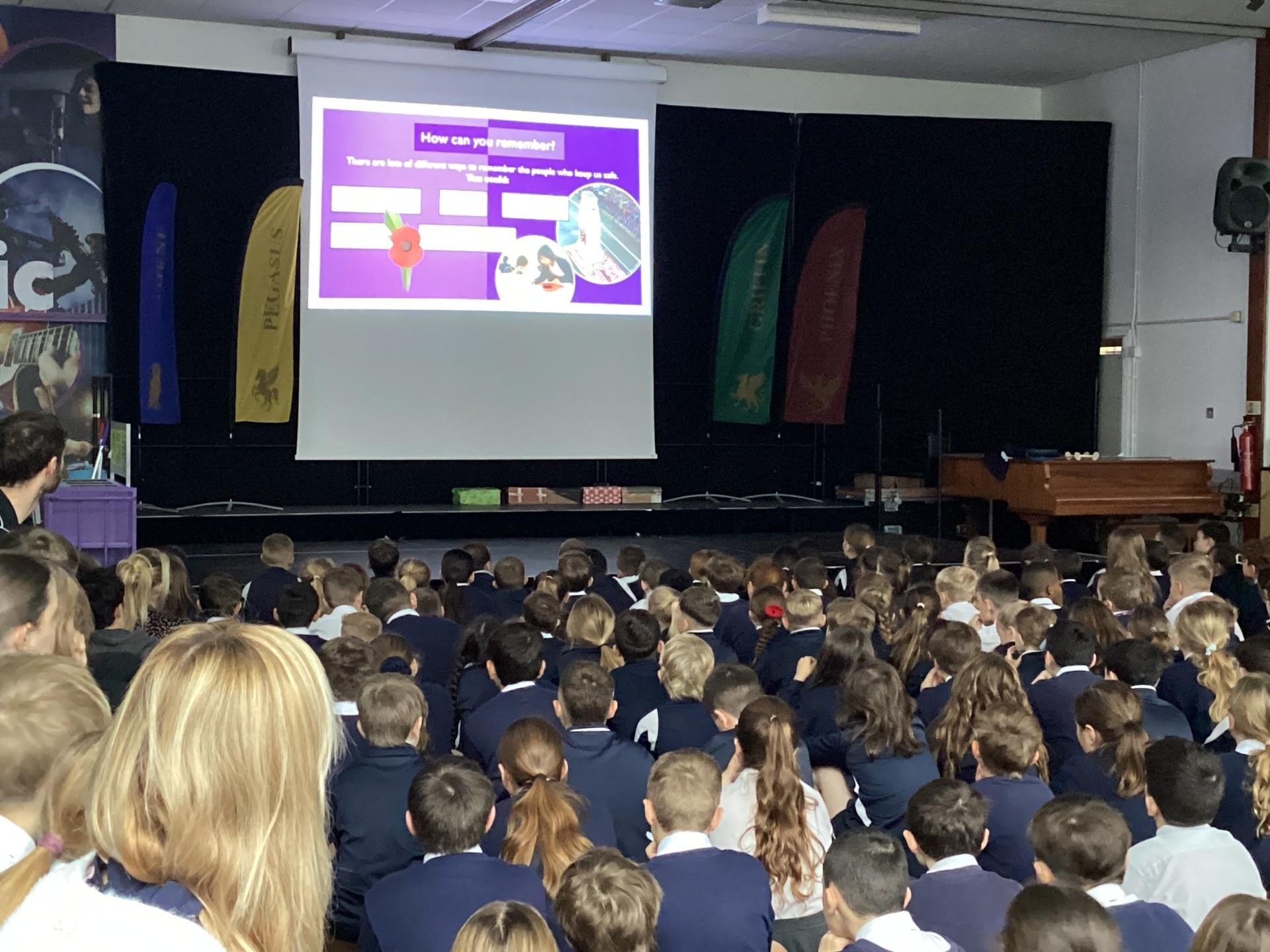
For Remembrance Day this year, we all came together as a school community to take part in our own Remembrance Service. We reflected on who the armed forces community were and how they work hard to keep us safe. We then looked at different ways to remember the sacrifices that people have made for us to keep us safe today before holding a two-minute silence.
Please see the document below for more information about our curriculum intent for History:
Please see the document below for more information about how we support the needs of all learners in History:
Please see the document below for more information about the curriculum overview and the key enquiry questions:
Please see the document below for more information about inclusion in History at Westacre:
Please see the document below for more information about the 'subject traits' we have planned in History that we aim for all our children to leave Westacre being able to do: